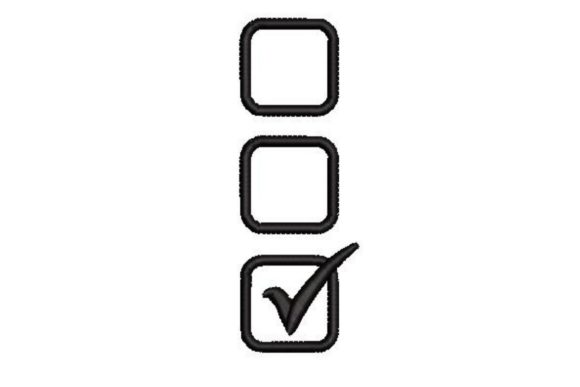
Tick Boxes: A Designer's Review for Branded Merch
As an embroidery designer who spends most of my days digitizing logos and troubleshooting stitch-outs for small businesses, I am always on the lookout for design assets that bridge the gap between playful creativity and professional utility. Recently, I took a close look at Tick Boxes, a machine embroidery design categorized under School but with far-reaching potential for commercial applications. My goal was to evaluate whether this file could serve as a viable component for branded merchandise, from boutique patches to staff uniforms, or if it remains strictly decorative.
First Impressions: Functional Charm Meets Brand Personality
The first thing that strikes you about Tick Boxes is its inherent sense of organization mixed with whimsy. The concept of a checklist is universally understood; it implies progress, completion, and satisfaction. For a brand, this translates beautifully into a message of reliability and attention to detail. Visually, the design feels friendly and approachable, yet structured enough to maintain a professional edge. It does not scream "corporate stiff," nor does it feel overly childish despite its School category roots. Instead, it offers a handmade product aesthetic that resonates deeply with today's consumers who value authenticity.
When viewing the digital embroidery file, the lines appear clean, suggesting a well-thought-out path for the needle. The description notes that "any fabric or clothing that you stitch it on will look beautiful," which is a bold claim, but one that holds weight if the digitizing accounts for fabric pull and distortion. The inclusion of a "nice checklist" element allows for customization, making it a versatile design asset for businesses that want to interactive with their audience.
Real-World Business Applications
In the realm of small business merch, versatility is king. I evaluated how Tick Boxes performs across various commercial embroidery projects. Here is where this design truly shines:
- Embroidered Patches: This is arguably the strongest use case. A patch featuring a checklist allows a brand to define its values or services literally. Imagine a local bakery with boxes checked for "Fresh Ingredients," "Made Daily," and "Love Included." As an embroidered patch, this can be sewn onto aprons, tote bags, or even packaging sleeves.
- Staff Uniforms and Aprons: For cafes and creative studios, apron embroidery is a staple. Placing Tick Boxes on the chest or sleeve of a work shirt adds a conversation starter. It humanizes the staff, suggesting they are ready to tackle the day's tasks.
- Cap Embroidery: While challenging due to curvature, a simplified version of this design could work on the side panel of a dad hat, offering a subtle nod to productivity and craft.
- Tote Bag Design: Canvas totes are a canvas for branding. The linear nature of checklists fits perfectly on the flat surface of a tote, serving as both a logo and a functional graphic for shoppers.
- Customer Gifts and Event Merch: For workshops or pop-up shops, stitching this design onto a small pouch or tag serves as a memorable takeaway that reinforces the brand's identity.
Technical Considerations for Production
While the artistic potential is high, a professional review must address the technical realities of machine embroidery. Before running a production batch of custom apparel or patches, there are critical factors to consider regarding Tick Boxes.
First, stitch density is paramount. Checklist designs often involve fine lines and small text. If the density is too high, the design may become puckered, especially on lighter fabrics. Conversely, if it is too low, the fabric might show through, ruining the crisp look of the checkboxes. I strongly advise testing the design in black and white first to inspect the spacing and coverage without the distraction of thread colors.
Second, consider the hoop size and placement. The description mentions the design comes with multiple options (implied by "comes with mult"), but exact dimensions are not specified in the brief. You must confirm the hoop size required before promising it to a client for a specific garment location, such as a narrow cap front or a small pocket.
Third, stabilizer selection is non-negotiable. When stitching on textured fabric like canvas totes or thick denim jackets, a cut-away stabilizer is usually necessary to prevent distortion over time. For items that need frequent washing, such as staff uniforms, the stability of the design is crucial to maintaining brand identity and professionalism.
Where to Use Caution
Not every surface is suitable for this level of detail. Be cautious when applying Tick Boxes to:
- Small Patch Sizes: If scaled down too much, the individual check marks may merge or become indistinguishable.
- Curved Surfaces: Cap fronts require careful hoarding and potentially a different digitizing edit to account for the curve.
- Dark Uniforms: Ensure there is sufficient contrast between the thread and the fabric. A dark navy shirt might swallow a dark green thread, rendering the checklist invisible.
- Tiny Lettering: If the checklist includes custom text, verify that the font size is legible after stitching.
Elevating Brand Identity and Customer Trust
Beyond the technical stitch-out, how does Tick Boxes affect the bottom line? In the competitive landscape of Etsy sellers and handmade brands, visual consistency builds trust. A well-executed embroidered logo tells the customer that the business cares about quality. Using a checklist motif subtly communicates that the brand is organized, thorough, and dedicated to completing tasks to a high standard.
This design enhances product value by turning a simple item, like a plain tote bag or a standard apron, into a piece of branded storytelling. It encourages buyer engagement; customers are more likely to photograph and share a unique, interactive design on social media than a generic text logo. Furthermore, for those creating printable mockup portfolios, this design offers a clear, recognizable graphic that translates well digitally, helping to secure client approval before a single stitch is made.
Final Verdict for Designers and Makers
Tick Boxes is a robust addition to any digital embroidery file library, particularly for those serving the education sector, creative agencies, or lifestyle brands. However, success lies in the execution. Before integrating this into your commercial embroidery workflow, ensure you review the specific file formats provided and confirm commercial licensing terms, as these details were not explicitly defined in the product snapshot.
Create a mockup for client approval, compare it beside other design assets to ensure visual harmony, and always test on real fabric that matches the final product. When used correctly, Tick Boxes transforms from a simple school-themed graphic into a powerful tool for brand recognition and professional presentation. It proves that even the simplest concepts, when stitched with precision, can elevate a small business's merchandise from ordinary to exceptional.