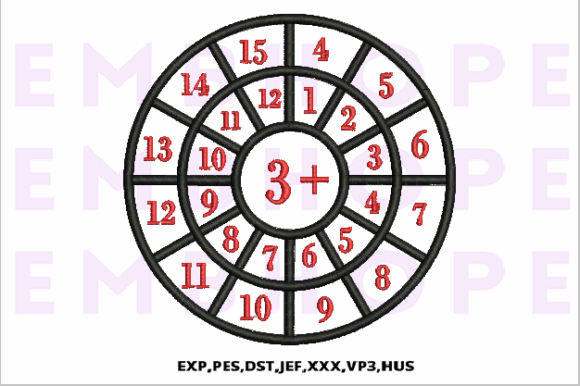
Addition Wheel 3: A Designer's Review for Branded Merch
As an embroidery designer who spends countless hours digitizing and reviewing files for commercial use, I approach every new machine embroidery design with a critical eye. It is not just about whether the image looks cute on a screen; it is about how that digital embroidery file translates into thread on fabric, how it withstands washing, and ultimately, how it serves a brand. Today, I am reviewing Addition Wheel 3, a design categorized under School and Embroidery, to evaluate its potential beyond the classroom and into the realm of small business merchandise.
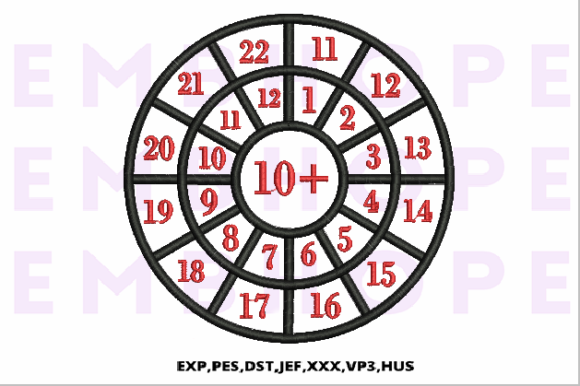
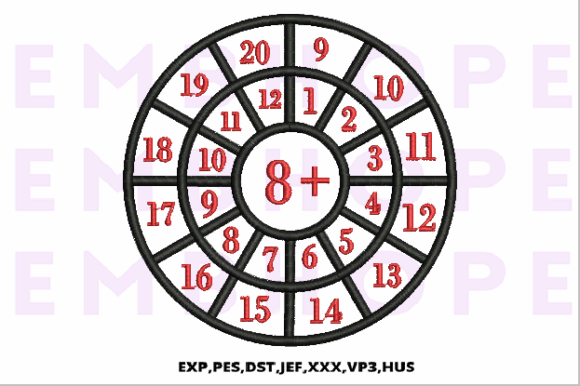
The first impression of Addition Wheel 3 is undeniably playful and educational. Based on the description, which highlights a "fun way to encourage kids to practice maths" with "bright and cheery" aesthetics, this design carries a specific visual personality. It feels friendly, approachable, and inherently handmade. For a standard school uniform or a teacher's resource, this is perfect. However, for a small business owner, a boutique, or a creative studio, the challenge lies in adapting this cheerful academic motif into a cohesive part of a brand identity. Does it look professional enough for a logo accent? Can it work as a standalone embroidered patch? Let's dive into the practical application.
Adapting Educational Designs for Commercial Use
While Addition Wheel 3 is rooted in education, its circular structure and bright nature make it surprisingly versatile for small business merch. Imagine a local bakery that wants to emphasize the "math" behind their perfect ratios, or a creative coding camp for children looking for custom apparel for their instructors. In these scenarios, the design stops being just a math tool and starts functioning as a symbol of precision, learning, and growth.
For commercial embroidery projects, the versatility of this design shines when applied to various products. Consider using it as a chest logo accent on staff polo shirts for a tutoring center. The circular nature of an addition wheel fits naturally on the left chest area, providing a balanced look that doesn't overwhelm the garment. Furthermore, it serves as an excellent candidate for an apron embroidery detail. For a family-owned cafe or a craft workshop host, having this design stitched onto an apron adds a touch of whimsy while reinforcing the theme of calculation and care in their service.
Another strong application is in cap embroidery. A structured baseball cap featuring Addition Wheel 3 could be a hit for summer camps or educational fundraisers. The key here is the "bright and cheery" color palette mentioned in the product description. When translated into high-quality thread colors, these hues can pop against navy or black caps, creating a vibrant finished product that customers actually want to wear. Additionally, this design works beautifully as a tote bag design. Tote bags are staples for bookstores and markets; a large-scale version of this wheel on a canvas bag acts as both a functional item and a walking advertisement for the brand.
Technical Considerations for Production
Before rushing to stitch out Addition Wheel 3 for a client order, there are several technical factors we must address to ensure quality. The description notes that these designs look great embroidered throughout the classroom, implying they are intended for visibility. However, when scaling down for smaller applications like a hat front or a small embroidered patch, details can get lost.
Stitch density is a primary concern. Educational designs often feature multiple elements to represent numbers or segments of a wheel. If the density is too high on a small scale, the threads may bunch up, causing puckering and obscuring the definition of the wheel's sections. Conversely, if the density is too low, the fabric underneath might show through, ruining the solid look required for a professional logo. It is crucial to inspect the spacing between the segments of the wheel. If the gaps are too narrow, they may fill in with thread during stitching, merging the distinct parts of the design.
Fabric texture also plays a massive role. While the design may look crisp on a smooth polyester blend typical of school uniforms, it might behave differently on the rougher weave of a canvas tote or the stretchy knit of a t-shirt. For textured fabrics, you may need to adjust the underlay or choose a heavier stabilizer to prevent the design from sinking into the material. Always test the design on the actual fabric you intend to use for the final run. Do not rely solely on a digital simulation.
Strategic Placement and Brand Consistency
Using Addition Wheel 3 effectively requires strategic thinking about where it lives on a product. On dark uniforms, the "bright and cheery" colors must have sufficient contrast. If the original file uses pastels, they might vanish against a charcoal grey shirt. In such cases, you might need to modify the thread colors in your embroidery software to ensure visibility without losing the design's friendly spirit.
For brands focusing on a premium or minimalist aesthetic, this design might feel too busy if used at full size. However, it can be repurposed as a subtle sleeve detail or a hidden interior label on a garment, adding a layer of discovery for the customer. This approach enhances buyer engagement and adds value to the handmade product. It tells a story—that the brand cares about the details, even the ones not immediately visible.
When considering brand identity, consistency is key. If Addition Wheel 3 is used alongside other design assets, ensure the line weights and stylistic choices match. You wouldn't want a hyper-realistic photo logo next to a cartoonish math wheel unless the juxtaposition is intentional. For Etsy sellers and crafters, creating a printable mockup that shows the design in context with your other branding elements is a vital step before committing to production.
Essential Designer Notes for Business Owners
To maximize the success of Addition Wheel 3 in your business, follow these practical steps:
- Test in Black and White First: Before committing to colorful threads, stitch a monochrome version. This helps you verify that the shapes and lines are distinct and that the design holds its form without relying on color contrast.
- Check Small Patch Viability: If you plan to sell this as a patch, stitch it at the smallest intended size. Ensure the text or numbers within the wheel (if any) remain legible and do not merge.
- Review Thread Color Contrast: Analyze the color chart provided with the embroidery file. Swap out colors if necessary to better match your specific brand palette or to improve visibility on dark fabrics.
- Inspect Spacing and Density: Zoom in on the digitized file. Look for areas where stitches might overlap excessively or where jump stitches are too long, which could snag during wear.
- Confirm Hoop Size Requirements: Although specific dimensions aren't listed in the brief description, always check the file properties to ensure the design fits your machine's hoop size limitations, especially for smaller items like caps.
- Use Proper Stabilizer: Match your stabilizer to the fabric weight. Cut-away stabilizers are generally safer for items that will undergo frequent washing, ensuring the design doesn't distort over time.
- Create a Client Mockup: Always present a realistic mockup to your client or view it yourself in context. This prevents misunderstandings about the final look.
- Verify Commercial Licensing: The description mentions "Please note tha," suggesting there may be specific terms attached. Since exact license terms are not fully detailed here, you must confirm commercial licensing rights before selling products featuring this design.
In conclusion, Addition Wheel 3 offers a charming and functional aesthetic that, with careful consideration, can transcend its educational origins to become a valuable asset for small businesses. Whether used for custom apparel, promotional patches, or unique packaging accents, its success depends on thoughtful execution. By paying attention to stitch quality, fabric compatibility, and brand alignment, embroidery professionals can turn this cheerful math tool into a profitable and recognizable element of their product lineup. Remember, the difference between a good design and a great product often lies in the details of production and the clarity of your vision.