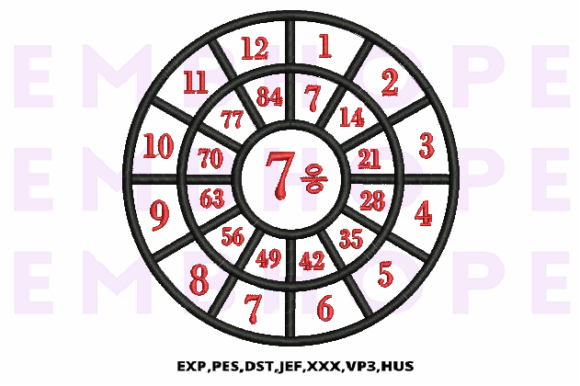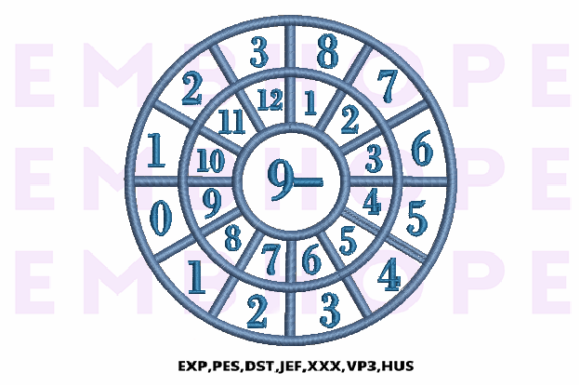
Minus Wheel 9: A Playful Asset for Small Business Merch
As an embroidery designer who has spent years digitizing and reviewing files for commercial use, I approach every new machine embroidery design with a critical eye. It is not just about whether the image looks cute on a screen; it is about how that digital embroidery file translates into a tangible finished product that represents a brand. Today, I am reviewing Minus Wheel 9, a design categorized under School themes, to see if it holds up as a viable asset for small business owners, boutique creators, and apparel decorators looking to expand their merchandise lines beyond the classroom.
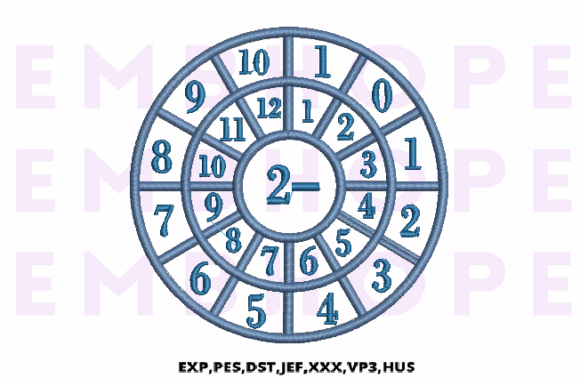
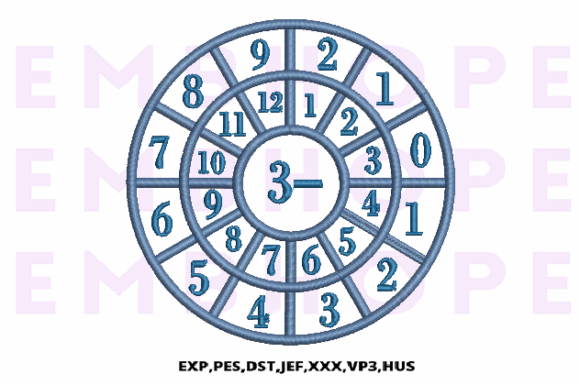
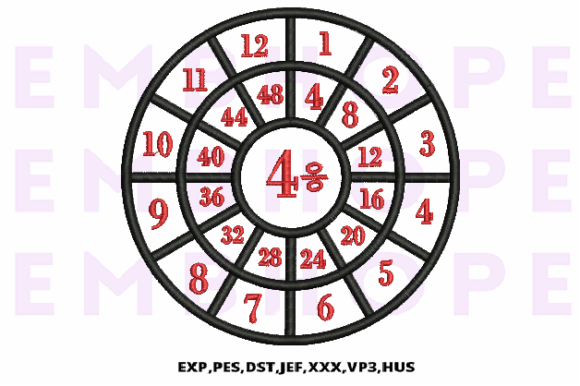
The first impression of Minus Wheel 9 is undeniably cheerful. Based on the description highlighting "bright and cheery" aesthetics intended to encourage kids to practice maths, the visual personality leans heavily into the playful and educational spectrum. For a standard school uniform or a daycare logo, this is perfect. However, for a coffee shop, a florist, or a handmade craft brand, the utility of this design requires a strategic shift in thinking. The charm here is its simplicity and friendliness, which can translate well into a "community-focused" or "learning-centric" brand identity if applied correctly.
Evaluating Visual Personality for Commercial Use
When we strip away the immediate context of mathematics, Minus Wheel 9 offers a graphic quality that works well for specific niches. The circular nature of a "wheel" design is inherently balanced, making it an excellent candidate for an embroidered patch or a chest logo accent. For a creative studio or a bakery that hosts weekend workshops for children, this design serves as a subtle nod to education without being overly academic. It feels handmade and approachable, which builds immediate trust with customers who value artisanal over industrial.
The key to leveraging this embroidery file for small business merch lies in color selection. While the original intent suggests bright, primary colors, a high-end boutique might opt for a monochromatic thread palette. Imagine Minus Wheel 9 stitched in tonal whites on a cream canvas tote, or in slate grey on a navy apron. This shifts the perception from "school supply" to "modern minimalism," allowing the design to function as a texture rather than just an illustration. This versatility is crucial for maintaining brand identity across different product lines.
Real-World Applications Beyond the Classroom
Let us consider a real-case scenario where a local café wants to launch a line of reusable tote bags for their loyalty program. Using Minus Wheel 9 as a central motif on a tote bag design can signal that the business is family-friendly and community-oriented. Similarly, for a pet brand that sells training treats, the concept of a "wheel" or a game fits the narrative of training and rewards. In these contexts, the design stops being about subtraction and starts being about engagement.
For custom apparel such as staff uniforms, this design shines as a sleeve detail or a pocket accent. If you run a co-working space or a makerspace, embroidering this onto staff polos adds a touch of whimsy that breaks the corporate mold. It acts as a conversation starter. Furthermore, as a printable mockup element for Etsy listings, it provides a unique visual hook that distinguishes your design assets from generic stock vectors. When customers see a physical sample of the stitch work, the texture adds perceived value to the item, justifying a higher price point for your handmade product.
Technical Considerations for Production
Before committing to a large run of commercial embroidery projects using Minus Wheel 9, there are technical hurdles to address. The description notes the design is "bright and cheery," which often implies multiple thread colors. In a production environment, more colors mean more machine stops, longer production times, and higher labor costs. You must evaluate if the visual impact justifies the extra runtime. For high-volume orders, simplifying the color count might be necessary to maintain profit margins.
Placement is another critical factor. If you intend to use this on cap embroidery, the curvature of the front panel can distort circular designs. A wheel shape must remain perfectly round to look professional; any distortion looks like a digitizing error. Therefore, testing on a curved surface is mandatory. Additionally, if the design includes fine details or tiny lettering (which is common in educational themes), it may not hold up well on textured fabrics like pique polo shirts or rough canvas. The stitch density needs to be robust enough to prevent the fabric from showing through, but not so dense that it causes puckering.
Strategic Placement and Fabric Compatibility
When applying Minus Wheel 9 to dark uniforms, you must ensure there is sufficient contrast. A light-colored math wheel on a black apron might look striking, but if the underlay is not sufficient, the dark fabric can mute the vibrancy of the top threads. Always test your stabilizer choice. For stretchy fabrics used in t-shirts or soft caps, a cut-away stabilizer is usually required to prevent the design from warping after washing. Since these items—especially aprons and tote bags—will undergo frequent laundering, durability is non-negotiable.
Small patch sizes present another challenge. If you shrink Minus Wheel 9 too much for a lapel pin or a small tag, the details may merge into a solid blob of thread. There is a minimum threshold for clarity that depends entirely on the specific stitch count and density of the file. Since the exact specifications are not provided in the brief description, it is vital to stitch out a test sample at your intended size before selling it as a branded patch.
Enhancing Brand Trust and Professionalism
Ultimately, the inclusion of a well-executed embroidery design elevates a brand from amateur to professional. Using Minus Wheel 9 consistently across your design assets—from packaging accents to employee uniforms—creates visual consistency. This consistency fosters recognition. When a customer sees that same wheel on your website, your shopping bag, and your shirt, it reinforces memory retention. It tells the customer that you pay attention to detail, which translates to trust in your core products.
However, professionalism also means knowing when not to use a design. If your brand positioning is ultra-luxury or strictly corporate, a playful math wheel might undermine your message. But for businesses rooted in creativity, education, childcare, or community building, it is a powerful tool. It humanizes the brand, suggesting that the business owners are approachable and fun.
Final Designer Notes and Best Practices
To ensure success with Minus Wheel 9, follow these practical steps before full-scale production:
- Test in Black and White: Stitch the design using only one or two contrasting thread colors first. This reveals the structural integrity of the digitizing without the distraction of color.
- Verify Hoop Size: Confirm that the design fits within your available hoop size, especially if you are working with smaller items like caps or pockets.
- Check Licensing: The description mentions classroom use, but for commercial embroidery, you must confirm the license allows for resale or branded merchandise. Never assume a file bought for personal use covers commercial rights.
- Create Client Mockups: Before stitching on expensive garments, create a printable mockup or a digital composite to show clients how the design will look on their specific products.
- Fabric Testing: Always test on the actual fabric you intend to use. A design that looks crisp on twill might sink into fleece.
In conclusion, Minus Wheel 9 is more than just a school-themed graphic. With the right strategic application, thoughtful color management, and rigorous testing, it becomes a versatile component of a small business's visual language. Whether it ends up on a barista's apron or a crafter's tote bag, its value lies in the execution. By treating it as a serious branding element rather than just a decoration, you can unlock new avenues for customer engagement and product differentiation.