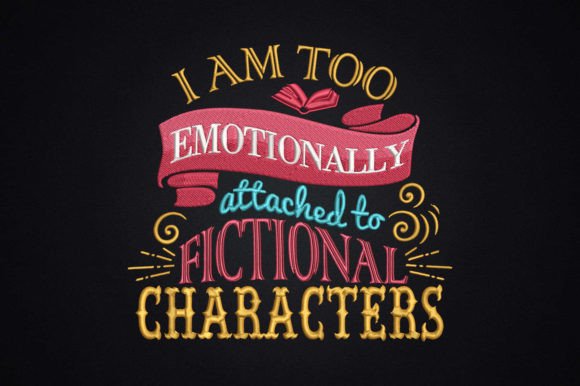
Review: I Am Too Attached to Fictional Characters Design
As an embroidery designer who has spent countless weekends setting up booth displays at local craft fairs, I know that the difference between a browsing customer and a buyer often comes down to one thing: immediate relatability. When I first pulled up the I Am Too Attached to Fictional Characters machine embroidery design on my screen, my instinct was to visualize it not just as a digital file, but as a tangible craft fair product. This phrase hits a specific nerve for a massive demographic—readers, binge-watchers, and dreamers who define part of their identity by the stories they love. In the world of School and youth culture, as well as among adult fans of fantasy and literature, this sentiment is universal. My goal in this review is to evaluate how this specific Embroidery asset translates from a digital embroidery file into a best-selling handmade product.
First Impressions and Aesthetic Appeal
The initial impact of I Am Too Attached to Fictional Characters is its bold, conversational tone. It is not trying to be subtle; it is a statement piece. Visually, this design leans heavily into the modern, slightly humorous aesthetic that dominates current social media trends. It feels less like traditional rustic decor and more like a trendy graphic tee you would find in a boutique. For an Etsy seller or a boutique maker, this is gold. It speaks directly to the customer without needing explanation. The typography likely plays a huge role here; if the font is clean and readable, it bridges the gap between "cute" and "cool." It is the kind of design that makes a potential buyer stop, smile, and say, "That is so me." This emotional connection is the primary driver for impulse buys at a busy market.
Strategic Product Placement for Maximum Sales
When planning my table display for the upcoming weekend market, I am mentally placing this design on specific items where it will shine. The description notes that it complements t-shirts, dresses, scarves, and home decor, but let's get practical about what sells best in a booth setting.
- Tote Bags and Market Bags: This is the number one candidate. A canvas tote bag design featuring this quote is perfect for carrying books, library visits, or convention swag. The flat surface of a tote allows for a larger hoop size, ensuring the lettering remains crisp and legible from a distance.
- Aprons and Tea Towels: While apron embroidery and tea towel embroidery are popular, this specific quote might feel slightly out of place in a serious kitchen unless marketed as a "reading nook" accessory. However, for a coffee-shop style apron worn by a barista who loves fantasy novels, it is a perfect fit.
- Patches and Pouches: An embroidered patch is a low-risk, high-reward item. Customers who might not want a full shirt can easily iron this onto a denim jacket or backpack. Small fabric pouches for holding earbuds or pens also work well, provided the text does not become too small to read.
- Pillow Covers: For the home decor section, a throw pillow with this message adds a splash of personality to a living room or dorm room, appealing directly to the School and college demographic.
Production Practicality and Batch Efficiency
From a production standpoint, the viability of I Am Too Attached to Fictional Characters depends on its technical execution. As a professional, I look for designs that are repeatable. If the stitch density is balanced, I can run multiple hoops in a batch without constant thread breaks or trimming issues. The fact that this embroidery file comes in multiple formats is a significant plus, allowing compatibility with various machines regardless of brand. However, before committing to a large run of finished products, I must consider the physical limitations of the design.
One critical factor is the scale of the lettering. If the design includes tiny details or very fine script, it may lose clarity when scaled down for a cap or a small pouch. Text-heavy designs require sufficient space to breathe. On curved surfaces like caps, the distortion can make long sentences difficult to read unless the digitizing accounts for the curve perfectly. Furthermore, when working with textured fabrics like waffle-weave towels or thick fleece, the stitches need to be dense enough to sink into the pile but not so dense that they cause puckering.
Visual Merchandising and Photography
In a physical booth, the strength of your display relies on contrast. If I am using dark fabric for my samples, I need to ensure the thread colors chosen for I Am Too Attached to Fictional Characters pop effectively. A white or metallic thread on a navy or black background creates a premium look that draws the eye. For online listings, this design photographs exceptionally well because it is text-based. It does not require complex lighting to show off gradient fills or satin stitch sheen; the message is the hero. Creating a printable mockup for social media teasers before the fair is highly recommended. Showing the design on a model wearing a t-shirt or holding a tote bag helps customers visualize the finished product in their own lives.
Critical Considerations for the Maker
Before listing this as a small shop product or adding it to your inventory of commercial embroidery goods, there are several technical checks you must perform. Do not assume the default settings will work for every material.
- Test on Scrap Fabric: Always stitch out a sample on the exact material you intend to sell. What looks good on cotton muslin might pucker on a polyester blend.
- Check Thread Contrast: Ensure there is enough contrast between the thread and the fabric. Low contrast can make the witty message invisible from three feet away.
- Review Spacing and Kerning: Look closely at the spacing between letters. Poor digitizing can cause letters to merge, especially in smaller sizes.
- Confirm Hoop Size: Verify that the design fits within your available hoop sizes without needing excessive re-hooping, which slows down production.
- Inspect Stitch Density: High density can make a garment stiff and uncomfortable. Ensure the backing and stabilizer choices match the fabric weight.
- Use the Right Stabilizer: For stretchy fabrics like t-shirts, a cut-away stabilizer is often necessary to prevent distortion over time. For woven towels, a tear-away might suffice.
- Create Real Mockups: Digital previews are helpful, but nothing beats holding the actual item to judge the drape and feel.
- Compare Fabric Colors: Test the design on at least three different fabric colors to see which combination yields the highest perceived value.
- Confirm Commercial Licensing: Crucially, since the product description mentions it is a design asset for sale, you must verify the license terms. Ensure you are permitted to sell physical finished products made with this file, as some licenses restrict use to personal projects only.
Ultimately, I Am Too Attached to Fictional Characters is a strong contender for any maker looking to capture the literary and fandom market. Its strength lies in its relatability and versatility. Whether stitched onto a sturdy tote for a book lover or a cozy pillow for a gamer, it transforms a simple textile into a conversation starter. By paying attention to the technical details of fabric texture, stabilizer choice, and display strategy, you can turn this machine embroidery design into a staple of your craft fair inventory. Remember, the goal is not just to sell an embroidered item, but to sell a piece of identity that your customer proudly wants to wear or display.